 By Mister G
 April 14, 2026
 9 min read
 Updated April 2026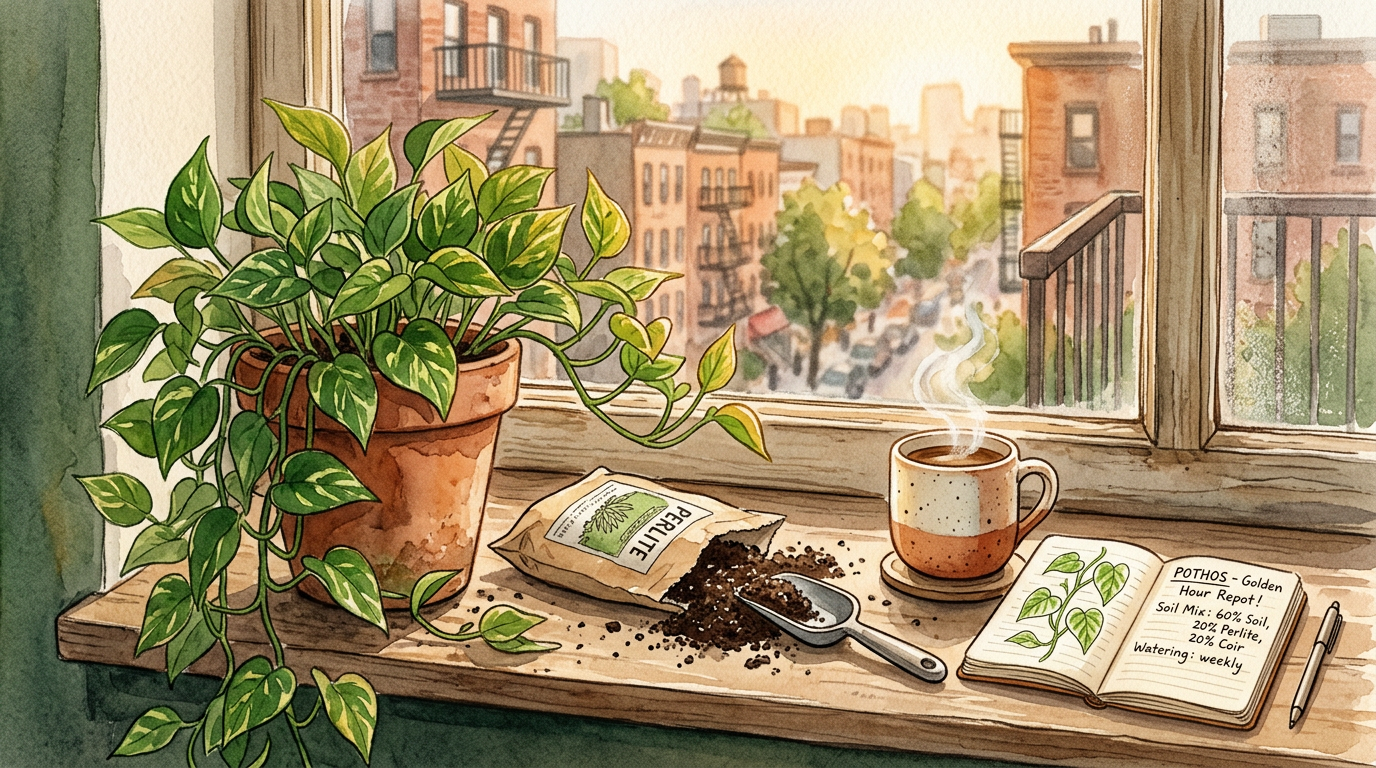
You bought the nice bag of potting mix. You watered the plant on a schedule. You didn't move it around too much. And it died anyway. Or worse, it's sitting there, alive but unhappy, not growing, not flowering, not quite recovering from that one time you went on vacation. I've been there. I'm still there, sometimes.
The thing nobody mentions when you buy your first houseplant is that "perfectly good" bagged potting mix is actually pretty terrible at what it's supposed to do. It's not the manufacturers' fault. The science of what a root needs is weirder than your intuition suggests, and the bag doesn't explain it.
This is the short, plain-English version. Once you understand what your plant's roots are asking for, you can fix most mystery houseplant problems in ten minutes at the garden center.
A Pot Is Not a Piece of Ground
The first weird fact: a pot behaves nothing like actual ground.
Out in a garden bed, gravity pulls water straight down. There's miles of soil below. Roots chase moisture down; air stays in the top layer where everyone can breathe. It's a big, forgiving system.
A pot is different. A pot has a floor. Water drains until it can't, and then it just sits in the bottom because surface tension holds it there. If your roots are down there too (they usually are), they're sitting in a shallow puddle every time you water. That puddle is where overwatering actually kills plants. It isn't the water that does it. It's the lack of oxygen in the saturated zone.
This is why two people with the same plant and the same watering routine can have wildly different results. One of them has a pot full of soil that stays airy even when wet. The other doesn't.
I killed three Calatheas in a row before I figured this out. Same plant, same watering can, same room. The difference was the mix — the first two were in a dense peat-heavy bag mix, the third was in a chunkier blend I threw together from a houseplant forum. The third Calathea is still alive two years later. The only thing that changed was air space in the pot.
What a Potting Mix Actually Has to Do
Your roots need three things from whatever they're sitting in. That's really it:
Water. Obviously. But not just any water. Roots drink the water that's clinging to the surfaces of soil particles (capillary water), not the water sitting in the puddle at the bottom.
Air. This is the one people miss. Roots breathe oxygen, just like leaves do in the other direction. When soil is so wet or so dense that there's no air between the particles, roots suffocate in a matter of hours. Root rot isn't caused by water. It's caused by the suffocation that follows.
Food. Nutrients, delivered slowly over time. Some soils hold onto fertilizer like a sponge. Others let it wash straight through. That's why a plant in a rich, compost-y mix can go months between feedings, while a plant in pure perlite needs fertilizer in every watering.
A good potting mix balances all three. A bad one nails one at the expense of the others.
The Four Kinds of Bagged Mix (and How They Fail)
You'll mostly see four categories at a garden center. Here's what's actually in the bag and where each one tends to go wrong.
| Mix type | What's in it | Good at | Where it fails |
|---|---|---|---|
| "All-purpose" potting soil | Peat, bark fines, some perlite | Cheap; fine for outdoor containers | Compacts fast indoors, holds too much water, dries into a brick |
| Cactus & succulent mix | Sand, perlite, small amount of peat | Drains well; good for succulents, cacti | Dries too fast for most houseplants; low fertility |
| Aroid / tropical / "chunky" mix | Bark, perlite, coco chips, sometimes charcoal | Excellent airflow; what rare-plant people use | Pricier; dries fast; low nutrient retention |
| Seed-starting mix | Peat, vermiculite, fine bark | Gentle on seedlings | Too fine for mature plants; compacts |
The most common mistake is buying a bag of "all-purpose potting soil" for a houseplant that would be much happier in a chunky mix. Pothos, philodendrons, monsteras, peperomias, snake plants, ZZ plants, hoyas, most aroids. All of them prefer a chunky mix, not the dense, peaty one that most bags default to.
You've probably heard the advice to put some gravel or broken pottery at the bottom of your pot for drainage. I'm sorry to tell you it does the opposite of what everyone thinks. Water doesn't drain down out of the soil into the rock layer. It pools on top of the rocks, because the big gaps break capillary action. Your roots now sit in a shallow pond a few inches above where they were. The real lever for drainage is particle size. Chunkier mix means bigger air pockets and a shallower wet zone. Fill the pot all the way to the drainage hole with the same uniform mix.
The Ten-Minute Fix
A lot of underperforming houseplants can be rescued with a simple substrate upgrade. Here's the cheapest reliable recipe, using stuff you can buy at any garden center:
The Generic Better Houseplant Mix
- 3 parts coarse perlite (the chunky kind, not the fine dust)
- 2 parts coco coir or plain potting soil
- 1 part orchid bark or horticultural charcoal
That's it. Mix, pot, water when the top inch is dry, fertilize at half strength every other watering. It's better than most bagged mixes for most houseplants. It won't be optimal for everything (a moisture-loving Calathea wants less perlite, a string-of-hearts wants more), but it's a safer starting place than the default bag.
You don't have to measure. "Handfuls" are fine. Three handfuls of perlite, two handfuls of coir, one handful of bark. Mix in a bucket. The ratio matters more than the precision. I've never pulled out a measuring cup for a potting mix, and I've potted a lot of plants.
The Quick Diagnostic, Before You Blame the Plant
If a plant's struggling, check the substrate first. This takes thirty seconds:
- Stick a finger two inches into the pot. Is it still wet more than 48 hours after watering? Too dense. Repot in a chunkier mix.
- Does the top of the soil have a white crust? Mineral buildup from tap water. Flush with plain water a few times.
- Smell the soil. Sour, swampy, mushroomy? Anaerobic. Repot immediately and back off watering.
- Lift the pot a week after watering. Does it weigh the same as when you watered? Not drying. Pot may be too big, or the mix is holding too much water.
- Roots circling the edge, with nothing in the middle? The center of the mix is too dense. Oxygen only reaches the pot walls.
Most "why is my plant dying?" questions resolve at this list. The ones that don't are usually a pest problem, a light problem, or a fertilizer problem. Not the soil.
When to Repot (and When Not to)
If the diagnostic pointed at the substrate, don't wait. Repotting into a better mix is the single highest-impact thing you can do for most struggling houseplants. That said — timing matters:
- Good times to repot: Spring and early summer when the plant is actively growing. Warm temperatures, longer days, fast recovery.
- Acceptable times: Any time if the substrate is the problem (anaerobic, root rot, compacted). The plant will recover slower in winter but waiting makes it worse.
- Don't repot just because: The plant is "due." Healthy plants in mixes that still drain well don't need repotting on a calendar. Check the substrate, not the date.
When You're Ready for the Science
If you've read this far and you're thinking "I want to go deeper," Petruscio Farms (our family site) has a full three-part Substrate Science series that gets into the actual chemistry and physics. Air-filled porosity, cation exchange capacity, the tap water problem. It's written for rare-plant collectors but the concepts apply to every houseplant on your windowsill.
The Petruscio Substrate Series
Three-part Foundation Primer for collectors who want the bench-notes version:
- How Substrate Actually Works — the physics, in plain terms
- The Aroid Ingredient Glossary — every ingredient you might put in a mix
- Designing a Mix — how to work backward from what the plant needs
You don't need any of that to grow a happy pothos. But if your collection is expanding and you're getting into the rarer stuff, or you just like understanding what's going on under the surface, the Petruscio series is where the real bench notes live.
The One Thing to Remember
When a houseplant is struggling and you've ruled out light and water and pests, the answer is usually the substrate. You don't have to become a soil scientist to fix it. Buy a better mix, or mix your own from three ingredients, and watch what happens.
Your plant is not mysterious. Your soil just isn't giving it what it's asking for.